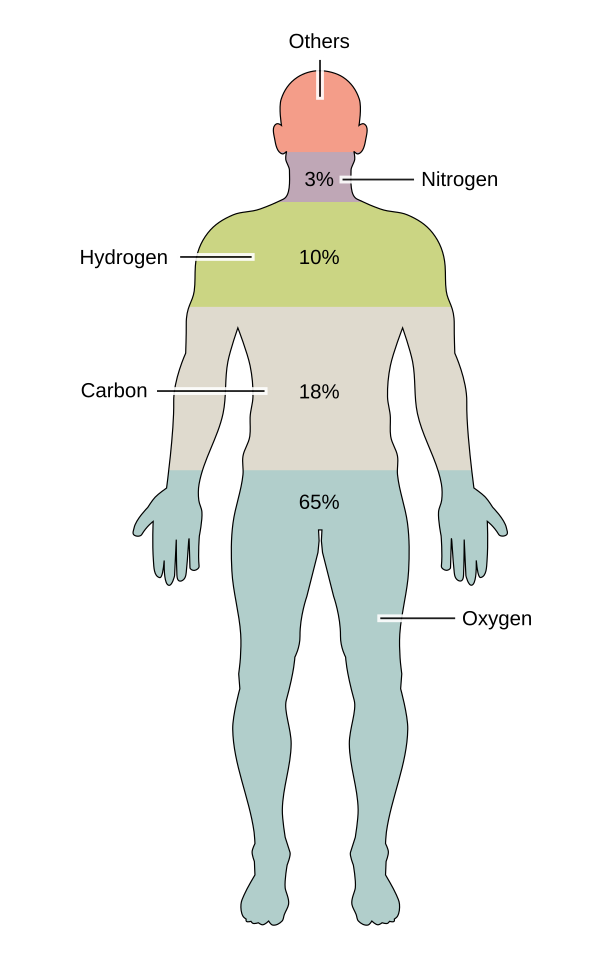
Earth is roughly 4.5 billion years old, give or take 50 million years, according to radiometric age dating. The earliest signs of life appeared between 3.8 and 4.3 billion years ago in the form of bacteria. As it stands, Earth is the only planet with the perfect balance of chemical composition to host diverse life, along with our own chemical composition being made up mostly of common elements found in and on Earth. There are commonalities shared between Earth's natural ecosystem and our own.
Earth has ecological limits, as do our physical bodies. The human body responds negatively to harmful toxins as does the Earth. Contrastingly, Earth does not age in the same way living organisms do. An average human life spans 100 years, and due to gravity, environmental, and biological factors, the body eventually declines over time. Slowly, energy levels decelerate, and healing from a wound takes more time than it once did — a clear sign of the aging process.
Cyclic change is a human commonality. We all reap the benefit and cost of Earthly living and share similar experiences during specific ages.
The Cycles of Life
The first birthday — the initiation of the life force — becomes the day we annually celebrate. This is known as the Solar Return.
As the precious newborn grows into the screaming two-year-old whose favorite word is “no,” they've arrived at what's known as the “terrible twos” — which is the inaugural Mars Return. This is usually a time when the toddler begins to assert themselves.
How the energy is carried out depends on who you are at the core. At this age, there hasn't been enough time on Earth to be taught how to be, who to be, or programmed into a specific behavior, so behavior is closer to who you really are before socialization. The first Mars return is the impetus of “I am” — an Aries keyword and marker of self-orientation.
These cycles persist and align with planetary returns in our developmental years: the physical form of puberty, learning life's reality against our ideals, well into the late twenties when we meet our first Saturn Return, and onward into the midlife crisis in the mid to late 30s, the liberating 40s, and beyond the threshold into the wisdom years of age 50 and beyond.
Planetary Returns
Planetary returns are the cyclic building blocks of life.
The personal luminaries and planets — Sun, Moon, Mercury, Venus, Mars, Jupiter, and Saturn — deliver cyclic returns of your personality, body, nervous system, values, drive, vision, and societal commitment.
The Sun returns to empower your life force
The Moon returns the habitual mind/body connection and its chemistry
Jupiter returns offer expansion via learning experience
Saturn returns the habitual work/societal connection and its result
The generational planets — Uranus, Neptune, and Pluto — deliver cyclic returns of collective themes: moving beyond limits (Uranus), re-imagining reality (Neptune), and collective regeneration (Pluto).
Chiron, an asteroid orbiting between Saturn and Uranus, brings the message of “perfecting imperfection.” Chiron's gift is in surrendering to unique life limitations, which aids mastery, expertise, and eventually breakthrough.
Planetary Return Reference
Return
Frequency
Keyword
Theme
Moon (Lunar)
Every ~28 days
“I feel”
28-day habitual body cycles Body chemistry maintenance, intuitive recalibration, body/mind alignment.
Sun (Solar)
Every year
“I will”
Annual return to day one of your life Personality, heart and soul renewal, your focus and purpose, how you shine every day.
Mercury
3–4 times per year
“I think / I analyze”
Return of the nervous system's command center Nervous system updates, cognitive shifts, new ideas.
Venus
Every ~8 months
“I have / I balance”
Return of what's valued and appreciated Relationships, values, pleasure principle, aesthetic and symmetric renewal.